

Go for the Green!
Sustainability Challenge in the Residence Halls

What is Go for the Green?
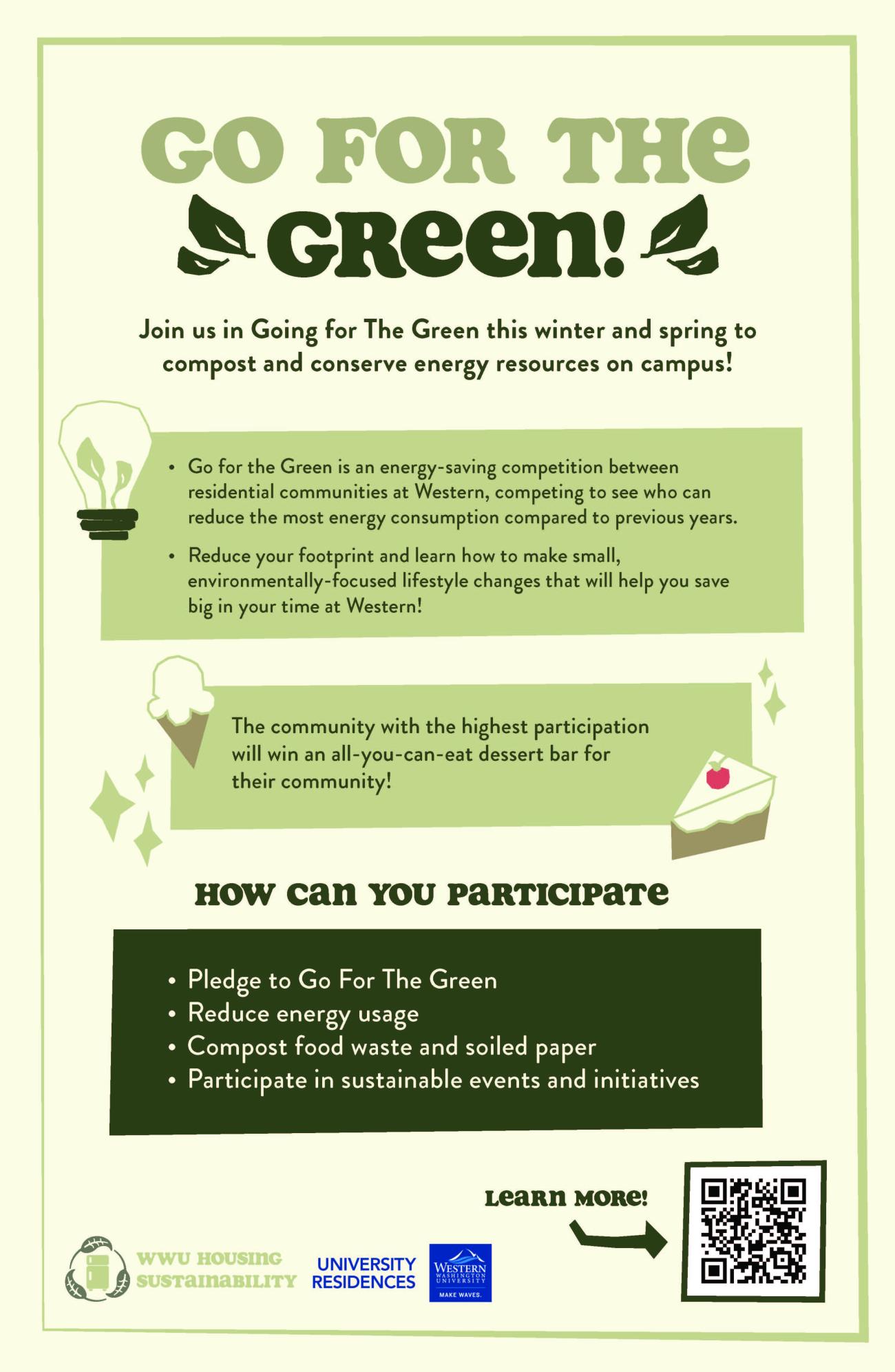
Go for the Green is our annual sustainability competition between residential communities at Western, focusing on composting food waste and reducing energy usage in the residence halls!
Students can pledge to take part in the competition from February 5 to Earth Day to conserve energy resources and compost on campus! Reduce your footprint and learn how to make sustainable behavior changes that will help you save big in your time at Western.
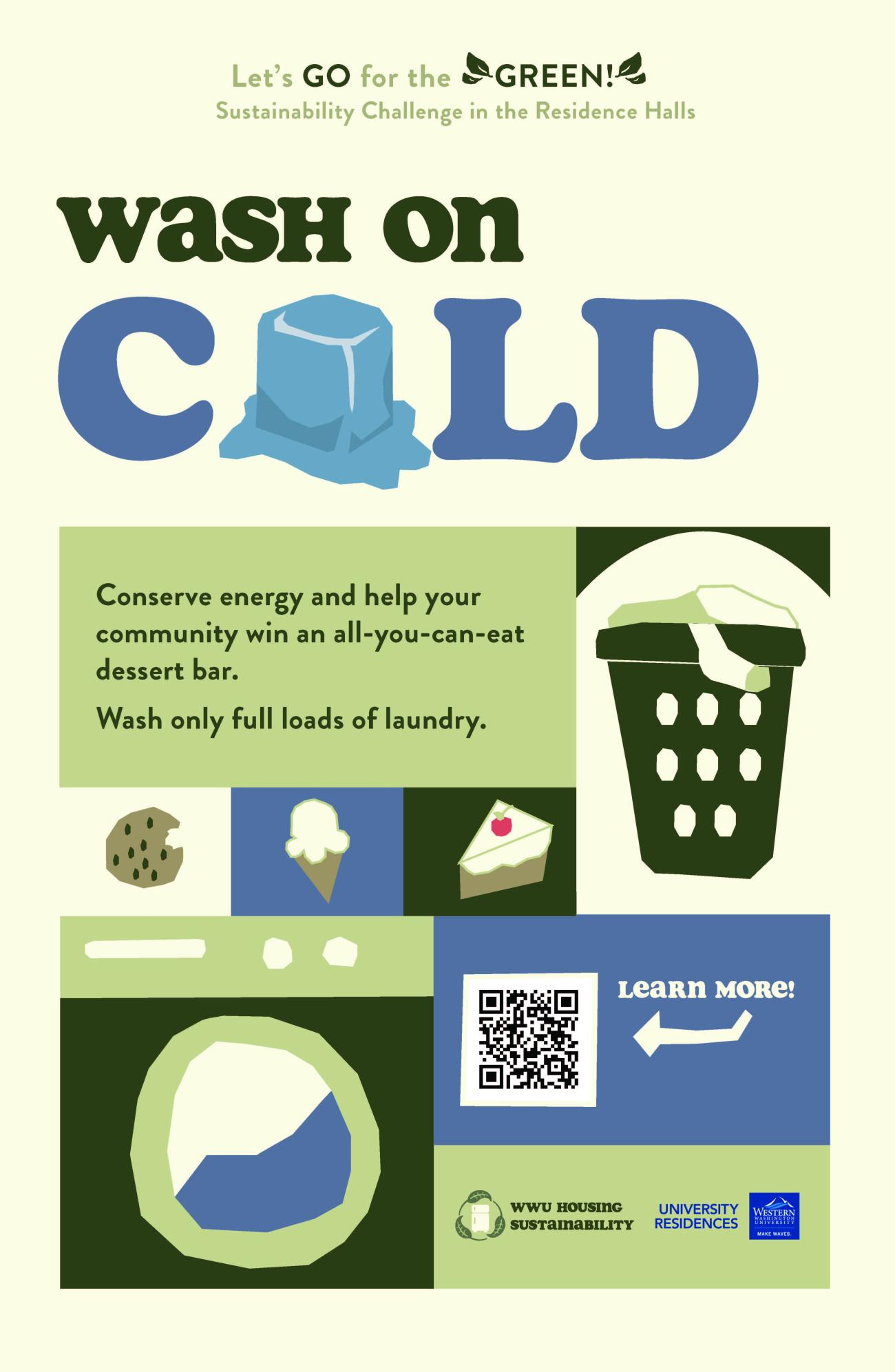
Students who pledge to Go for the Green get a custom sticker-sheet set and poster to hang on their door and are entered into a prize raffle with gifts from local Bellingham businesses. The community that reduces the most energy consumption will win a dessert bar for their community!
2024 Go for the Green Winner
Congratulations Edens-Higginson, they saved the most energy overall with an 11% energy usage decrease
Overall Metrics
This year, residences took part in our most successful competition with our highest participation and greatest energy saving! Here's a look back on your efforts and success during this year's Go For The Green sustainability competition!
- 474 Residents Participated (almost 12% of all residents on campus!)
- 8% Overall Decrease in Electricity Use in Resident’s Halls!
- Reduced Carbon Emissions by 58.8 Metric Tons of CO2
- Buchannan Towers Reduced Electricity Usage by 15%
- Alma Clark Glass Reduced Electricity Use by 14%
- Edens-Higginson Reduced Energy Use by 11% Overall

2024 Donors
Big thank you to our 2024 Go for the Green donors: Third Planet, Neko Cat Café, Worn Again Thrift, Vital Climbing Gym and Yoga, Sweet As Waffles, A Lot of Flowers, Wink Wink, Serena Gelato, Bellingham Food Co-Op, Camber Coffee, Serendipity, ACME Ice Cream, The Daisy Cafe/Union Coffee, Western AS Bookstore, Fairhaven Walkers & Runners, AB Crepes, Cute But Crazy Socks, Ragfinery, and El Capitan's!
Sustainable Events and Initiatives!
This years Go for the Green events
Join us to celebrate Earth Week and Go For The Green at the annual Housing Sustainability Clothing Swap!
- Bring unwanted clothes and swap for new to you items.
- Food, music, and prizes!
- Go For The Green winning hall announced!
Come get involved with WWU Housing Sustainability and celebrate Go For The Green with us!
Volunteer with us on Thursday, April 25 from 3-8pm at our annual clothing swap and get a limited edition WWU Housing Sustainability 5-panel hat!
Sign up here!
Where: WWU Wade King Rec Center - MAC Gym
When: Set up @ 3 pm, Event @ 4-7 pm, Take down @ 7 pm (NOTE: Please ensure you can be available for the whole duration of the event from set up to take down)
Need to know:
- Wear something comfortable, we will be movin' and groovin'
- Snacks will be provided
- You can participate in the clothing swap but please know that you are to be facilitating an organized event space and providing support to participants, hosts, vendors, etc.
If you have any questions/comments/concerns, please email Dora at vaughad3@wwu.edu.
Many thanks, and Happy Go For The Green!
Click here to RSVP to the Clothing Swap and enter to win a free mending kit!
How You Can Participate:
1. Pledge to Go For The Green
2. Reduce your energy usage
3. Compost food waste and soiled paper
4. Participate in sustainable events and initiatives
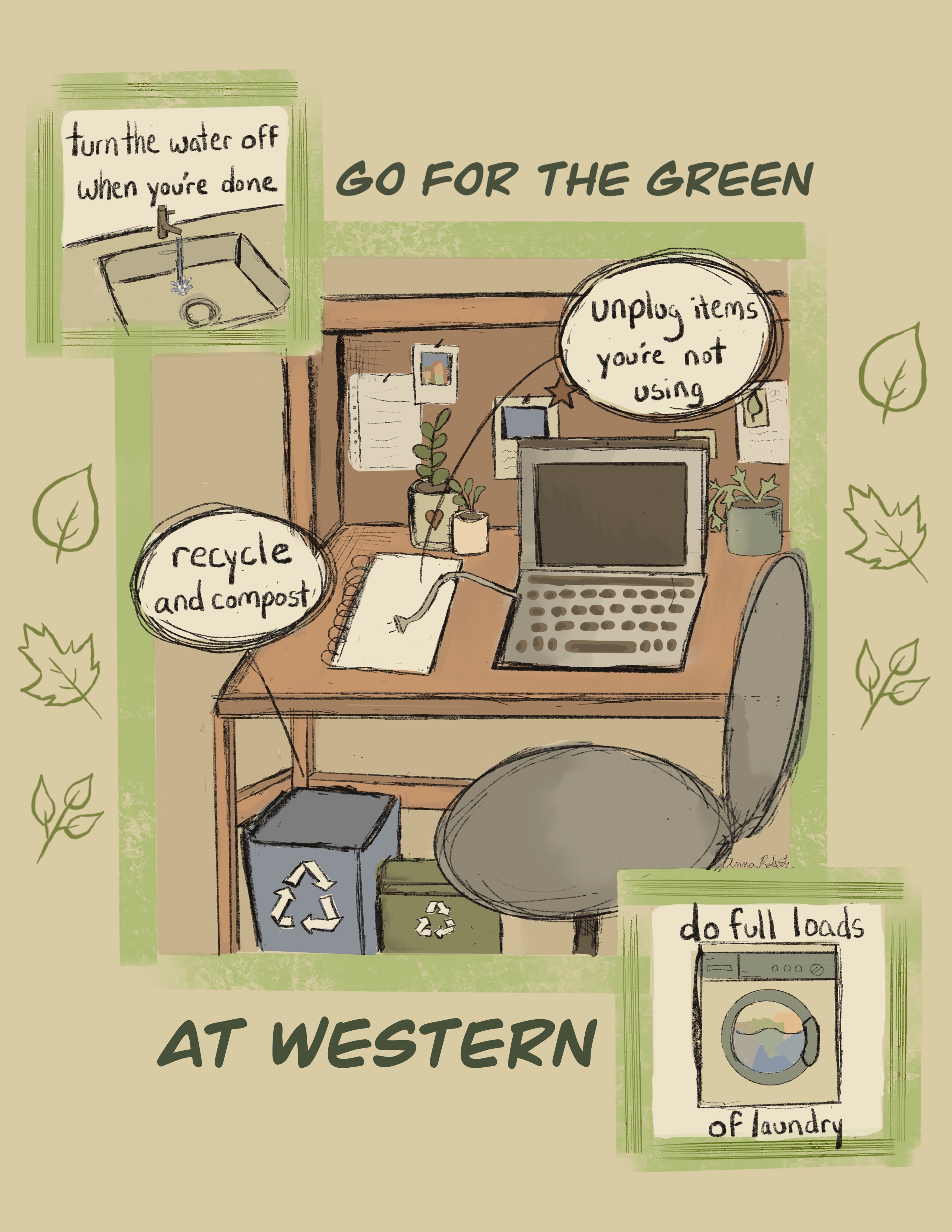
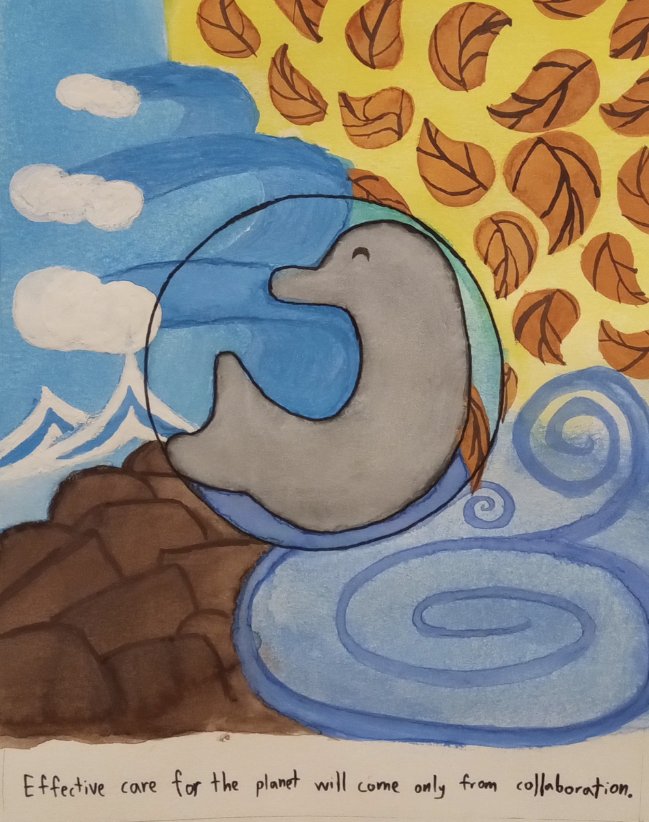
5. Enter our poster submission competition, creating art that inspires sustainable behavior change for the planet - prizes for top 3 finalists!
Why Pledge?
- It helps build positive, sustainable, money-saving habits that students can take with them when they move off-campus.
- It helps save energy at WWU during the coldest months, a high energy-consuming period of the year.
- Diverting food waste from the landfill mitigates WWU's footprint (food waste in landfill produces methane, harming our environment). Reducing compost contamination increases amount of food waste that can be sent to be repurposed.
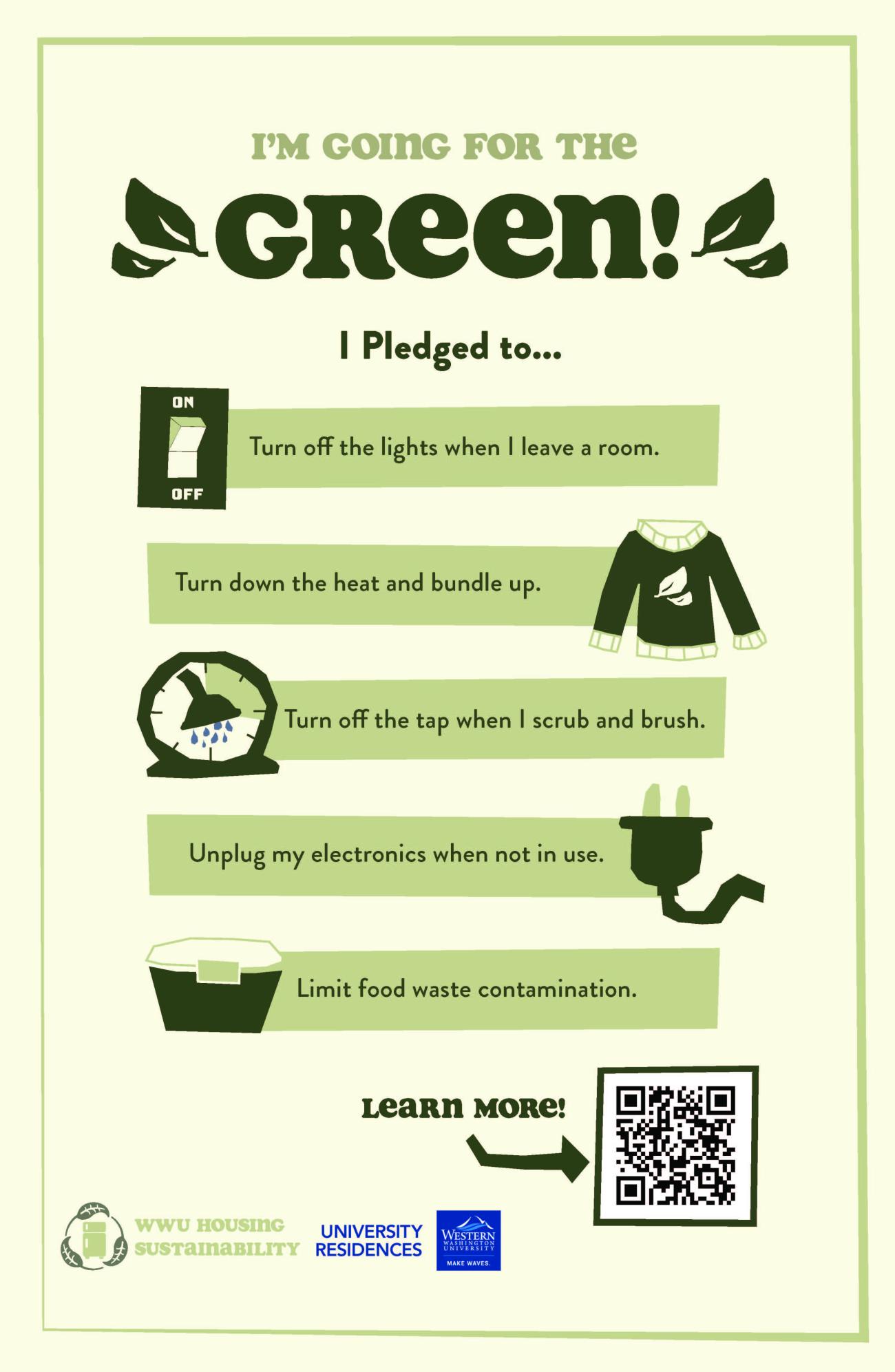
I Pledge To:
- Turn off the lights when I leave a room
- Turn down the heat and bundle up
- Turn off the tap when I scrub and brush
- Unplug my electronics when not in use
- Limit food waste contamination
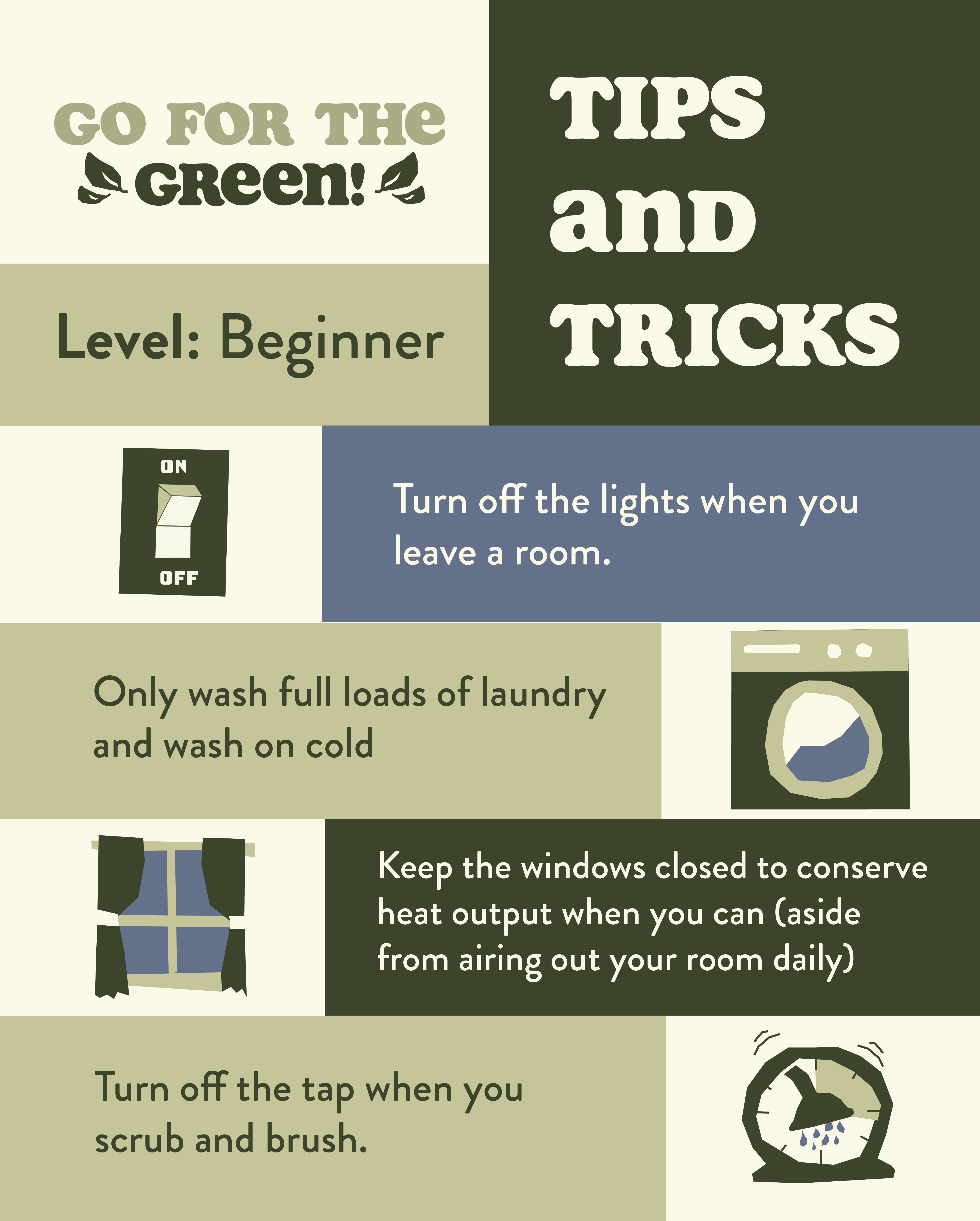
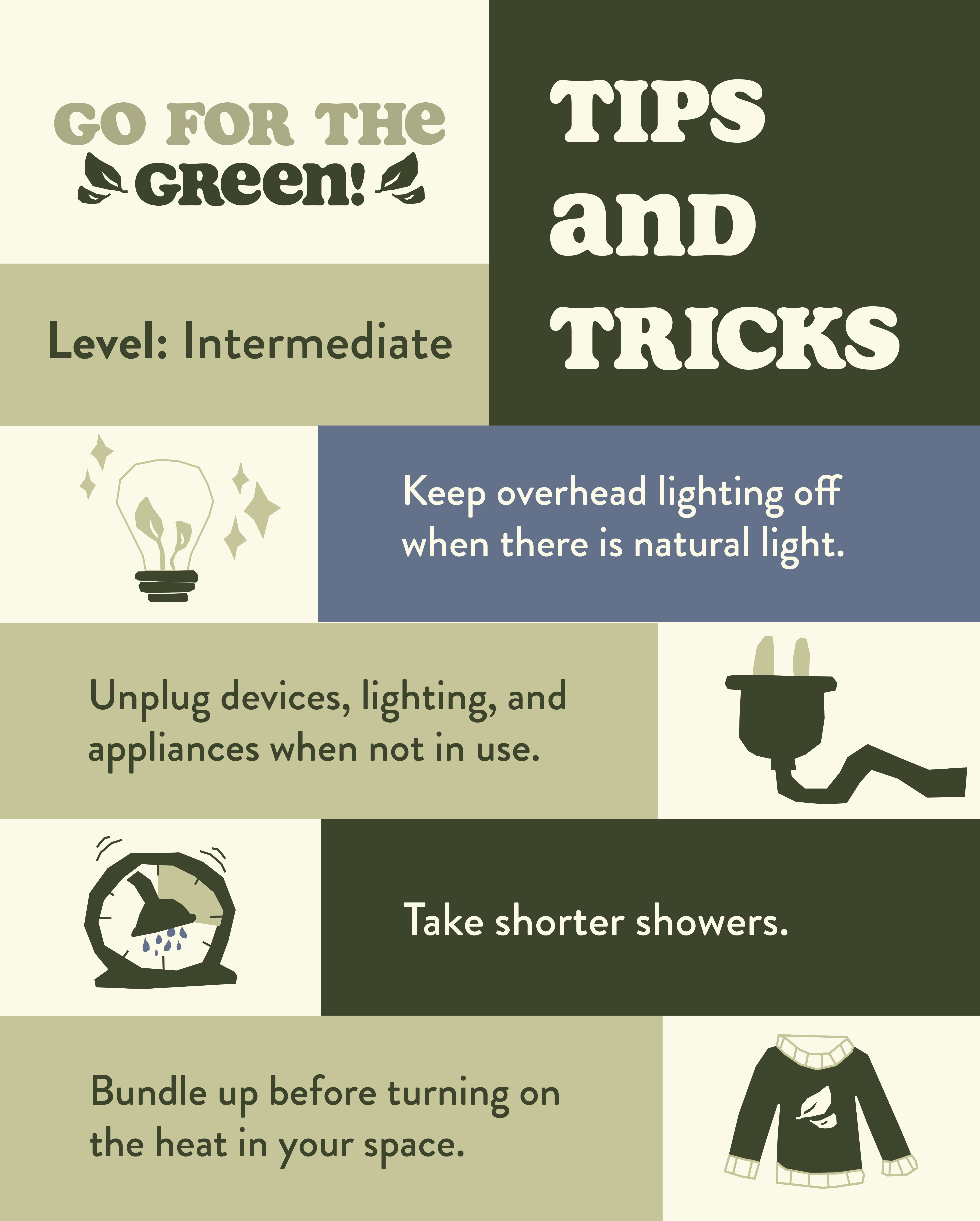
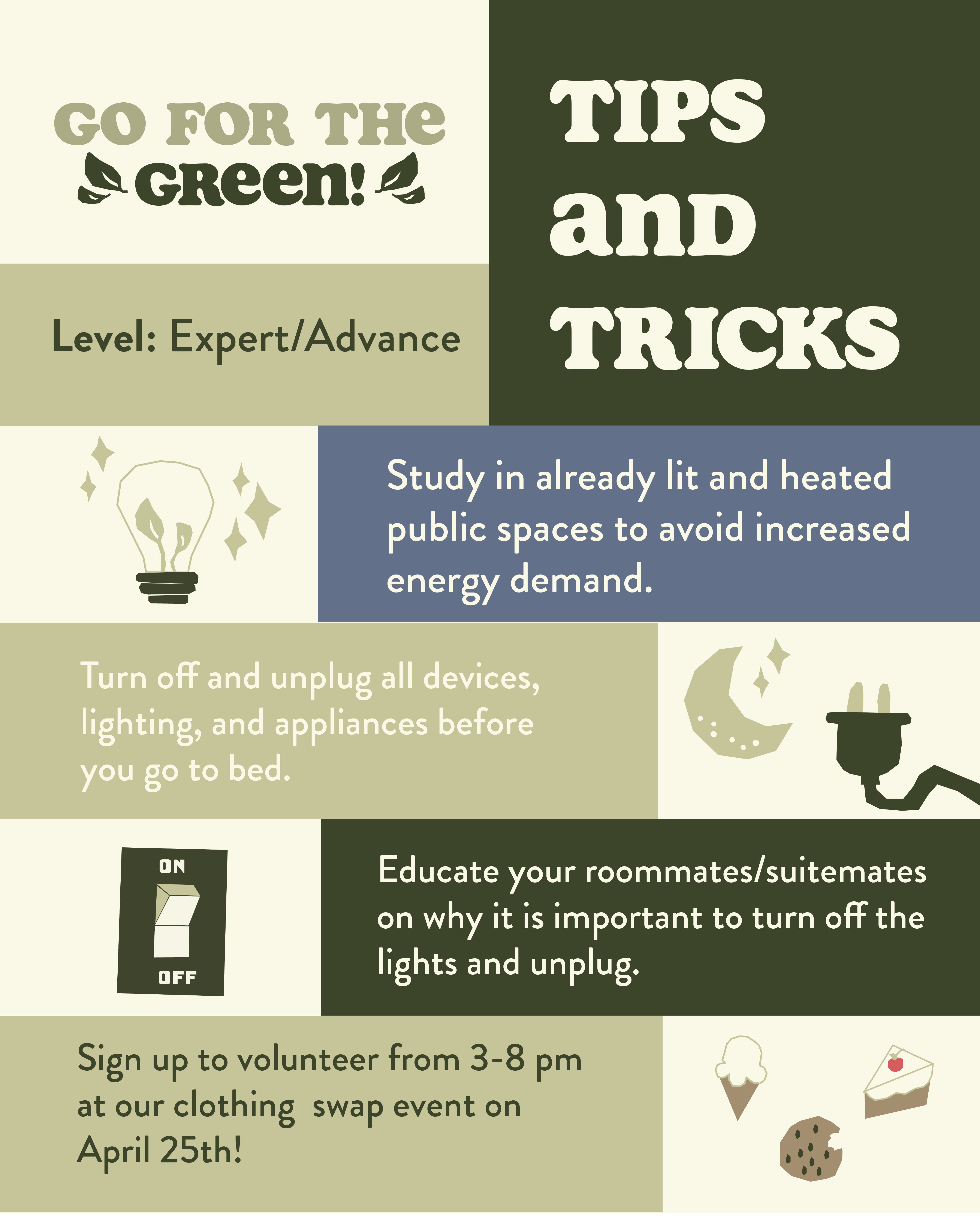
Go for the Green Tips & Tricks
2024 Points Tracker
The 2024 Go for the Green competition kicked off February 5, culminating with a celebration during Earth Week. This years community points and standing below!
Edens-Higginson
1702
1st Place
ACG-Kappa
1027
2nd Place
Beta-Gamma
954
3rd Place
Mathes
774
4th Place
FAIRHAVEN
742
5th Place
Nash
662
6th Place
SODA
509
7th Place
Buchanan Towers
418
8th Place
Birnam Wood
291
9th Place
Points Breakdown
Waste
10% reduction (over total period) = 50 points
Participation
1% population pledges/in attendance = 50 points (max out at 10%)
Energy
1% reduction of consumption/person = 50 points
WWU Concepts + Poster Submissions
1% of population/community submits entries = 200 points
Go for the Green Poster Contest
1st Place
2nd Place
Frequently Asked Questions
Here are some easy ways to reduce your energy usage for GFTG:
- Wash only full loads of laundry, and wash on cold
- Turn off lights when you leave a room
- Turn down the heat and bundle up
- Keep windows closed to conserve heat when you can (aside from airing out room)
- Turn off the water when you scrub and brush
- Unplug your electronic devices, lighting, and appliances when not in use
- Take shorter showers
- Take the stairs over the elevator if you are able
- Limit TV time
- Study in already lit/heated public spaces to avoid increased energy demand
- Turn off/unplug all devices, lighting, and appliances before you go to bed
To compost:
- Compost food scraps and soiled paper in the provided compost bin in your room
- Know where your compost drop-off location is
- Avoid placing landfill trash in green compost drop off toters to reduce compost contamination
We will be catering a dessert bar for the winning residential community! We encourage all residents from the winning community to come together to celebrate their win, take a load off, and eat some delicious free desserts. You’ve earned it! Vegan and gluten free options will be available.
Good question! We will be comparing each residential community to themselves in previous years- for example, Nash’s energy use will be compared to an average of Nash’s energy use between 2018 and 2023, so that the change in usage will be relative to its normal energy consumption. We are just comparing the percent change in energy consumption compared to average years, so that we can calculate the impact that students are having!
Contact Us!
Want to learn more? Check out Housing Sustainability or email residencesfacilities@wwu.edu.
Follow our Instagram @wwuhousingsustainability for regular program updates!
Additional Resources
Looking for additional sustainability resources? Use these to take your knowledge to the next level:
We the Power | YouTube
- Local community members break down legislative barriers and taking power from big energy companies and putting it back in the hands of locals.
@energy | Instagram
- The U.S. Department of Energy shares ways to reduce energy use and promote clean energy.
@intersectionalenvironmentalist | Instagram
- Follow for posts focusing on the intersectional aspects of environmentalism. A great place to start if you’re new to sustainability and want to learn!
Energy Justice & Climate Change Resistance | Podcast
- Listen to intersectional environmentalist discuss the “link between marginalization + climate vulnerability” and the importance of energy justice.